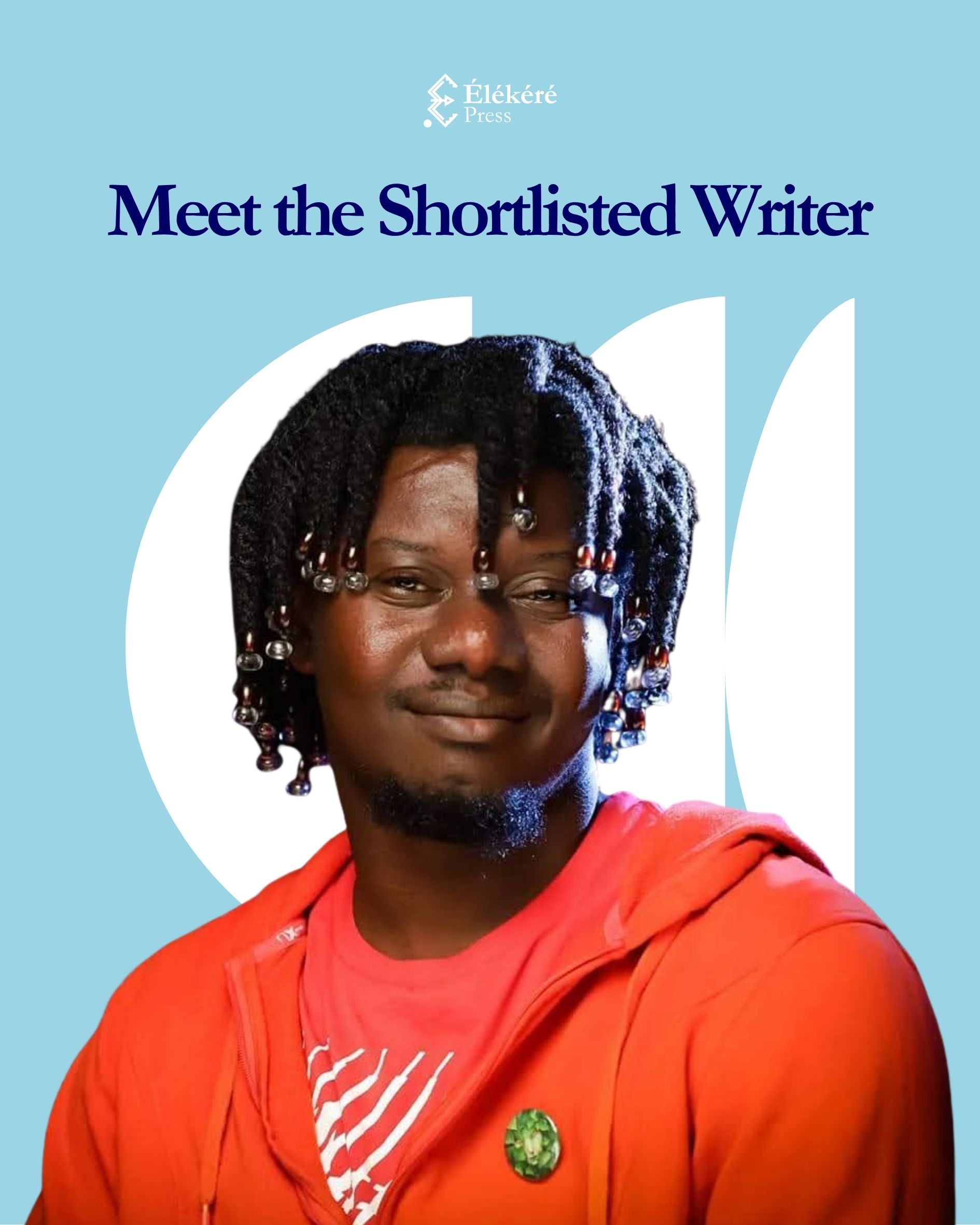

Oghenechovwe Donald Ekpeki is an award-winning Nigerian science fiction and fantasy (SFF) writer, editor, and publisher whose work has helped shape the visibility of African speculative fiction. His writing and editorial projects explore questions of power, its absence, and what people do to obtain it, wield it, or survive without it.
In this conversation, Ekpeki reflects on discovering writing as a child, the writers who have shaped his literary imagination, the realities of trying to work without reliable electricity, his debut novel and the projects he hopes to bring into the world.
1. Introduce yourself!
My name is Oghenechovwe Donald Ekpeki. I am the most awarded African-born SFF writer, editor, and publisher, with many of my awards representing racial or continental firsts. I have written, edited, and published some of the most awarded works and authors in African science fiction and fantasy in roughly a century of the genre’s existence.
2. When did you first realise you were a writer? What was the moment like?
Shortly after I could literally write, sometime between the ages of five and ten. I cannot remember exactly.
It was a humbling moment. Lol. I had been reading lots of stories by then and decided I would sit down and write one of my own. After sitting for hours and failing to come up with anything, I perhaps discovered my first case of writer’s block.
I swore I would master this elusive skill. Decades later, I am still trying, though I think I have made some small progress.
3. What are some authors and writers you admire, and why?
Ben Okri. He is a distant relative and a beautiful writer. Hello, The Famished Road.
Octavia Butler. Her writing is a religious experience, literally. Hello, Olamina. Her dystopias are beautiful things, even though they are not supposed to be.
Ursula K. Le Guin, for the Omelas kid. James Tiptree, for inspiring the Tiptree Award, now the Otherwise Award, which I won a year after Akwaeke did.
Isabel Fall, for I Sexually Identify as an Attack Helicopter. We shared a ballot in the Otherwise Award, and that is something I will always be proud of. I wish the world had allowed us to have more of their work.
Emeka Walter Dinjos inspired me to found the Walter Dinjos Memorial Award, even though it ran for only one year. In his brief time, he was the most influential and inspirational African speculative fiction writer I knew.
I could go on and on and on. Oh, and before I go, Tendai Huchu. His world-building is chef’s kiss.
4. How would you describe your authorial interests? What themes, questions, and topics interest you?
I eventually discovered that most of my writing revolves around the theme of power. I guess that, as a disabled Nigerian, it has played a huge role in my life.
Nigeria has its chronic power outages, both literal and figurative, and is the poverty capital of the world. At some point, I realised that my work often revolves around power: who gets to wield it, its absence, and the lengths people who have lacked it will go to obtain it.
I am interested in how the lack of power, and the search for it, affects people, as well as how they use it once they obtain it.
5. What is a typical writing day like for you?
I had a tweet about this a while back. Let me see if I can recall. It went something like this:
I wake up, my battery is down, and there is no power. So I try to charge my phone. I walk around and eventually find a place to charge it. But, oh look, I have to buy something there to give me an excuse to be there while charging my phone. And it is an expensive restaurant, so I buy something small. I eat it and charge my phone.
It is full, so I walk back home. By the time I get home, it is almost noon, and I am tired. The sun was really hot from all that walking around. I have a shower and a quick nap. I wake up, and it is afternoon. I am hungry again. Let me go and find or prepare something proper to eat because I have not really eaten today.
I do. After that, I find my battery is low. It is evening now. There was power briefly, but it is gone before I could charge my phone. So I go out to charge again. By the time I get back, it is past six and getting dark. Let me quickly work. Boom! The power is gone again.
I will just get dinner. It is so stressful eating in the dark. You know what? Let me just nap again. I will probably wake up when there is light at some point later.
Damn, it is morning the next day.
Well, that was a whole while back. Things have gotten easier now, and I did manage to do some writing, or I would not be here.
6. What are you working on? Tell us about your works in progress.
My debut novel, Birth of Orisha, is due next year. It is the first book in my trilogy, The Orisha Cycle. You can preorder it and see the cover here.
I am also working on the second volume of the Dominion anthology. We are currently receiving and reading submissions for it. You can find the submission call here.
My third work in progress is myself.
I recently fractured my spine after a Chowdeck rider hit me, and the company left me to die. After months of bed rest and physiotherapy, I have been trying to rebuild my endurance and get fit again.
I was recently endorsed by the Arts Council England as a global leader and an exceptional talent in science fiction and fantasy literature. I am now working to raise the money for the final part of my Global Talent Visa application. You can donate towards the application and my healthcare following the accident through my GoFundMe campaign.
7. If you could reread any book or story multiple times, what would it be and why?
Mame Bougouma Diene and Woppa Diallo’s A Soul of Small Places. It was published in the Africa Risen anthology, which I co-edited.
It made Caine Prize history three times over. It was the first story by Senegalese writers to win, the first co-authored story to win, and there was one other thing I cannot remember now.
It is written in a way that is reminiscent of African oral storytelling traditions. It is powerful and lyrical.
8. Do you have any reading recommendations for us?
Anthologies, anthologies, anthologies!
I love short stories, and anthologies offer a plethora of them, especially Year’s Best anthologies.
9. Where can people reach you or follow you?
Readers can find me on the following platforms:
- Twitter/X: @penprince_
- Instagram: @penprince
- Website: www.odekpeki.com
- Substack: odekpeki