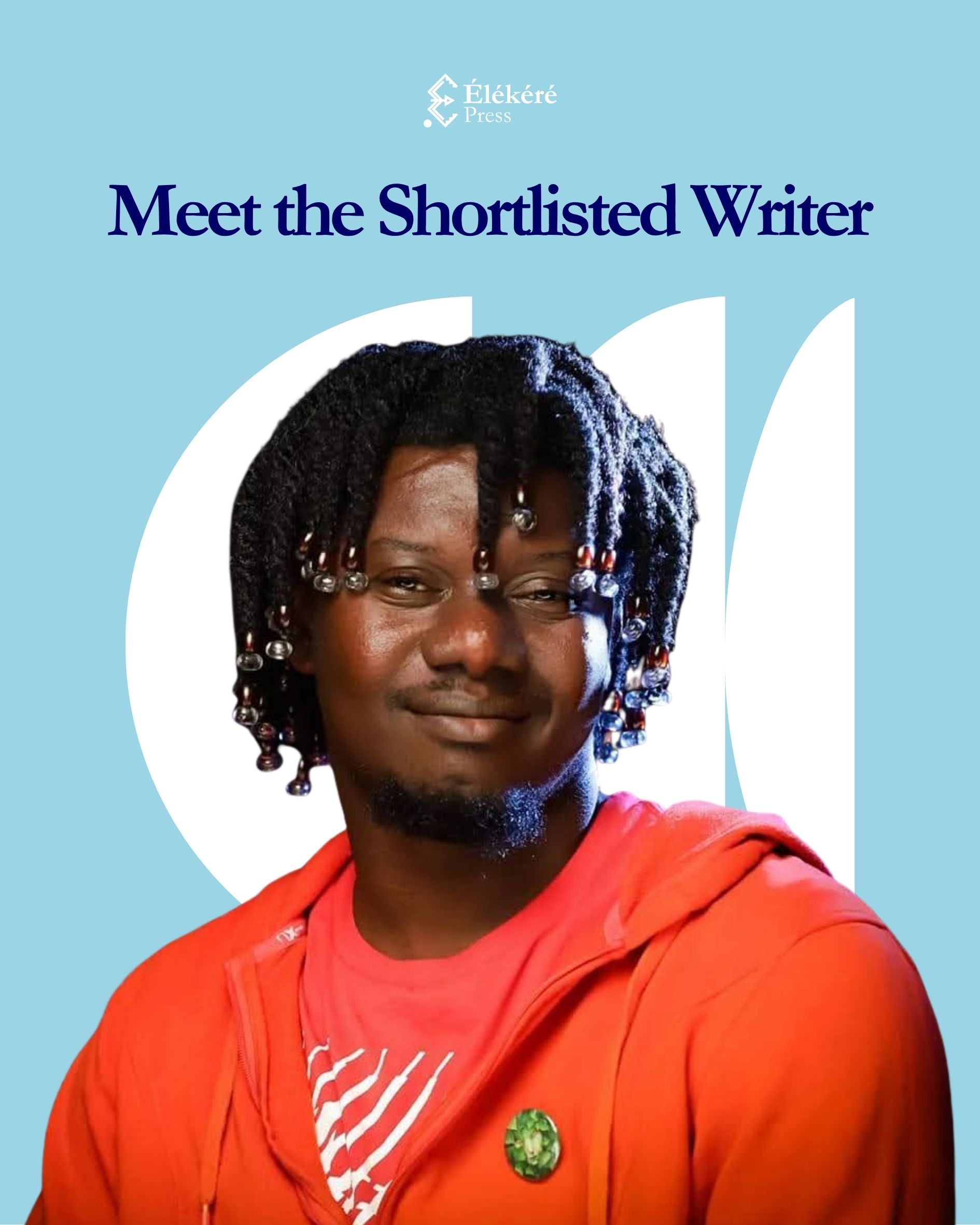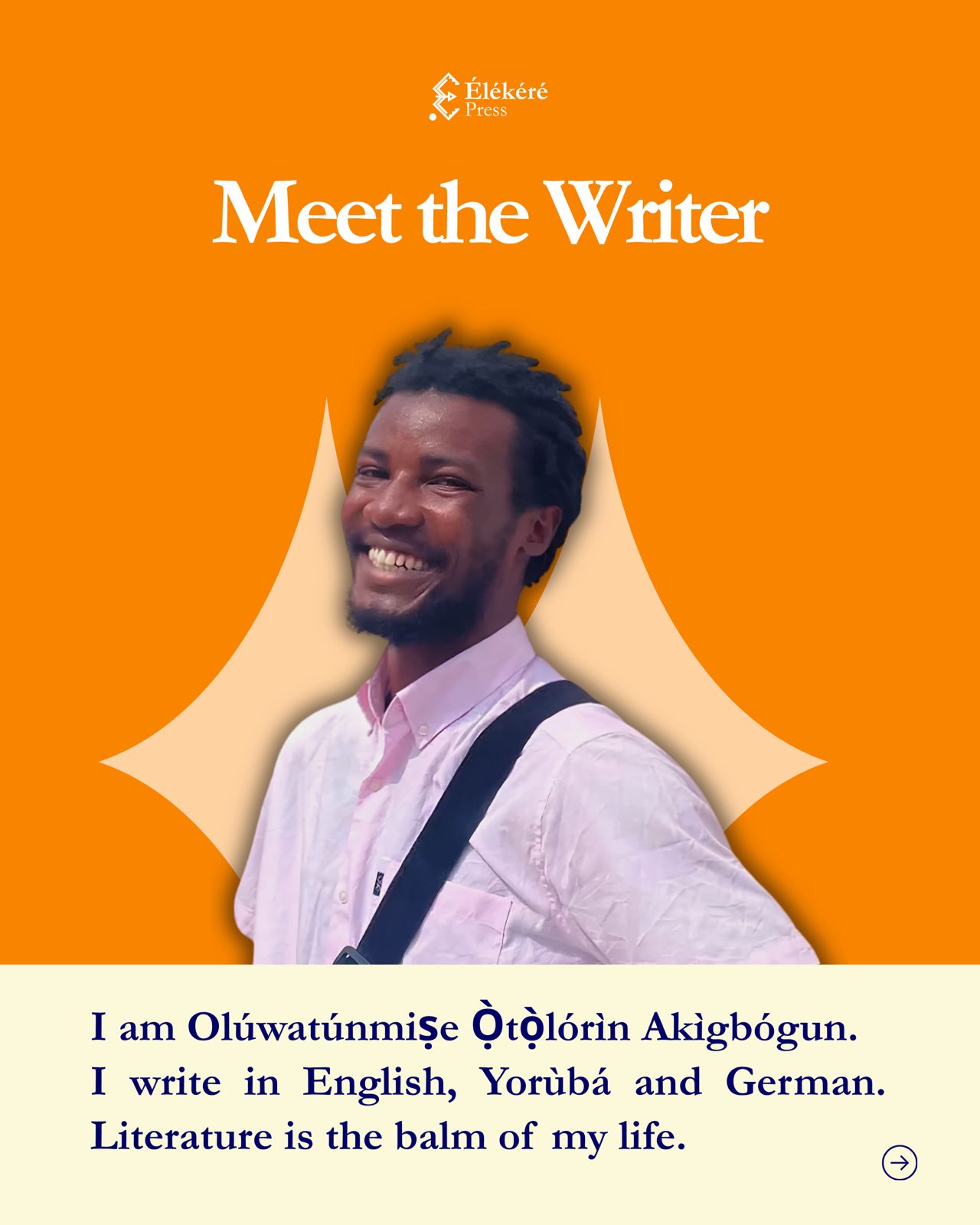
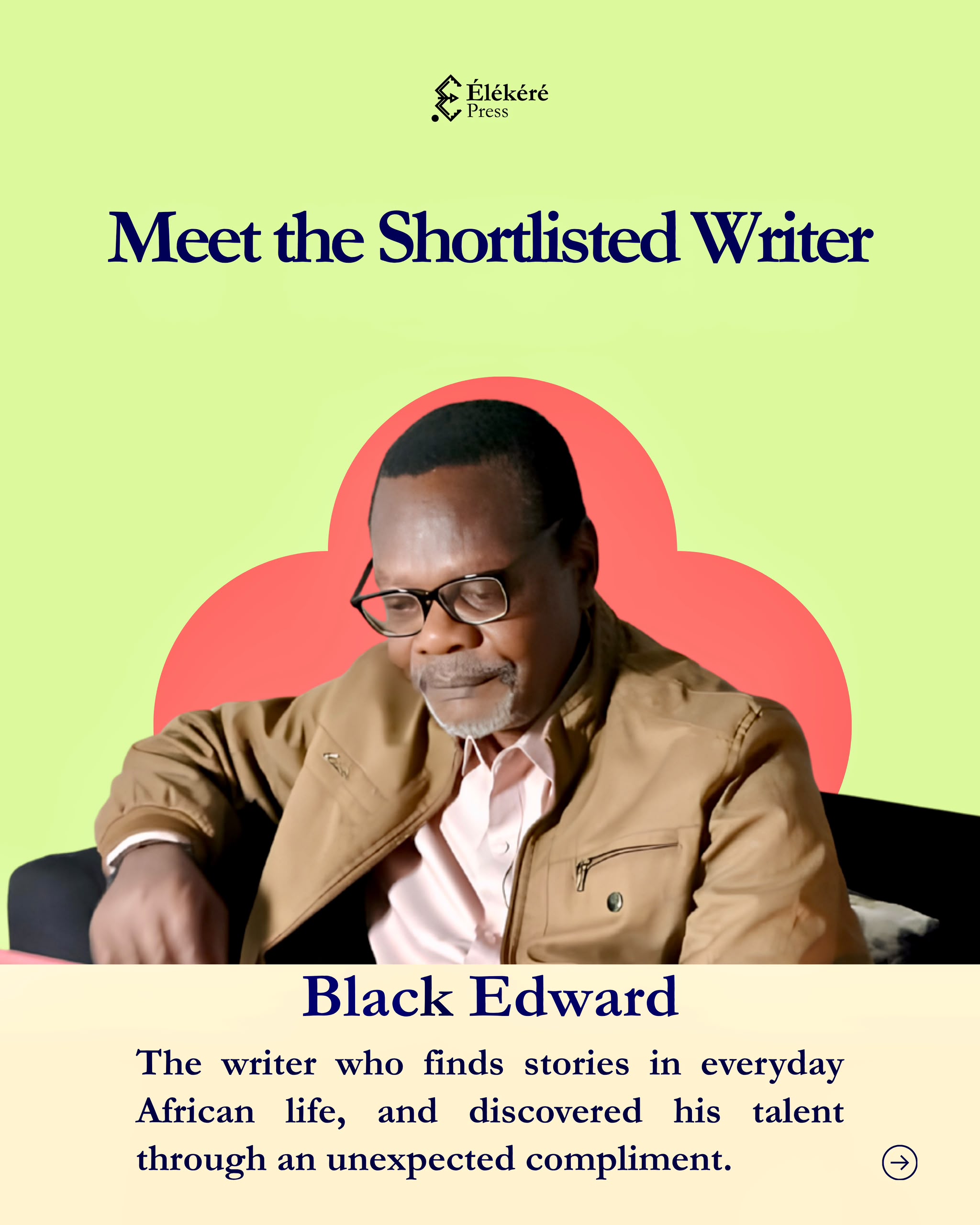

What do we inherit from those who came before us, and how do we carry that inheritance into the lives we build? For Black Edward, these questions are inseparable from the everyday realities of African life: family, work, displacement, identity, and the struggle to preserve dignity in difficult circumstances.
A writer, retired educator, and veteran journalist, Black Edward brings the attentiveness of a journalist and the curiosity of a teacher to his fiction. His shortlisted story, The Inheritance of Hands, follows a nineteen-year-old who must care for his two younger sisters after their mother’s death. As he works to keep his family together, he discovers that inheritance can extend beyond material possessions to the values, habits, and resilience passed down through generations.
In this conversation, Black Edward reflects on the experiences that shaped his writing, the writers he admires, his enduring relationship with Chinua Achebe’s Things Fall Apart, and what recognition from the Élékéré Short Story Prize would mean to him.
1. Introduce yourself!
I am Black Edward, a writer, retired educator and veteran journalist with decades of experience in newsrooms and classrooms. I hold a Bachelor of Education degree, a Master of Science degree and professional qualifications in journalism.
Teaching showed me how to share knowledge effectively. It also taught me how people learn and respond to stories. Journalism trained me to observe closely, ask challenging questions, and verify facts. Writing helps me combine these skills while exploring the lives, struggles, and contradictions of the people around me.
2. How would you describe your authorial interests? What themes, questions, and topics interest you?
I write about African identity and the complexities of everyday life: how people earn a living, love, quarrel, make difficult choices and try to hold their lives together as society changes around them.
The post-colonial experience features prominently in my work, particularly the unresolved questions of land, language, identity and belonging. I also focus on systemic corruption, authoritarianism and the different ways people resist injustice.
I am drawn to characters who are neither entirely good nor entirely bad. People are complicated, and I like exploring what they do when circumstances force them to confront themselves.
3. Tell us about your shortlisted story and what inspired it.
My shortlisted story, The Inheritance of Hands, follows nineteen-year-old Tawanda Chipande, who finds himself responsible for his two younger sisters, Thandi and Tionge, after their mother’s death. They live in a three-room house in Glen Norah Extension, Harare. There is no reliable income, food is running low, and Tawanda must find a way to keep his family together before their circumstances overwhelm them.
He starts a small poultry and livestock business, using whatever materials and resources he can find. As the business grows, he discovers more about his grandfather, Sekuru Chipande, and the legacy he left behind. Tawanda comes to understand that some inheritances have nothing to do with money, property deeds or lawyers. They live in the habits, values and working hands passed from one generation to the next.
Tawanda has no special advantages, and there is no convenient rescue waiting around the corner. At a young age, he is forced into adulthood. He must learn to manage money, make difficult decisions and take responsibility for two children who depend on him. His exercise-book accounts and a makeshift chicken coop become part of a much larger struggle to preserve his family and give it a future.
At the heart of the story is the question of what we inherit beyond material possessions. Tawanda’s connection to his grandfather links him to a family history shaped by work, survival, ancestral land and displacement. It also reflects the enduring relationship between rural communities such as Gokwe and the cities where later generations have made their homes.
Although the characters are fictional, their circumstances are recognisable. It is a story about hardship without reducing its characters to their suffering. Tawanda is vulnerable, but he is also determined, resourceful and capable of learning. His journey shows how a young person can begin building a future with very little, provided he has the courage to keep working and the willingness to learn from those who came before him.
The story was inspired by the resourcefulness I’ve seen in communities like Glen Norah, where I witnessed people working hard to survive instead of waiting for handouts that never come. A run of broilers behind a rented room pays the school fees. A tuck shop knocked together from planks and a cooler box feeds a household. Formal jobs are scarce and budgets are stretched thin, yet people keep finding ways to eat. I have seen young men with no lawyer, no title deed and no inheritance start with a borrowed wheelbarrow and end up as employers. They did it with their heads and their hands.
4. What are some authors you admire, and why?
I admire Ignatius Mabasa for his commitment to writing in Shona and for the clarity with which he explains that choice. His work reminds me that language is not merely a vehicle for telling stories. It carries memory, culture and a people’s understanding of the world. Writing in one’s mother tongue is therefore an assertion of dignity, not simply an act of nostalgia.
I also admire Chimamanda Ngozi Adichie for her precise, engaging prose and her ability to make characters feel fully human. She handles complex questions of identity, family and society without losing sight of the individuals living through them.
Both writers remind me that a good story can address important questions without turning its characters into mouthpieces for the author’s opinions.
5. When did you first realise you were a writer? What was the moment like?
I was in Form Two when I received my first unexpected indication that I might have a talent for writing.
I had gone to visit a friend who was in Form Four, just two houses away from ours. I wanted him to help me with my composition homework. Instead, he laughed and told me that he was the one who needed my help. Mr Mbirimi, my Form Two teacher, also taught the Form Four class. My friend explained that Mr Mbirimi regularly read my compositions aloud to the Form Four class as examples of good writing.
I was so excited that I could hardly contain myself. I ran home to tell my parents, and they were as delighted as I was.
Looking back, I realise how important that moment was. My teacher had recognised something in my writing, and my friend’s words gave me the confidence to take that possibility seriously.
I began to imagine a future in which I would teach, work as a journalist and write. In time, those three paths became part of my life. I could not have known then how much each would teach me about people, language and the power of a well-told story.
It is interesting that I went to my friend seeking help with a composition and came away with something far more valuable: the possibility that writing could become my life’s work.
6. What is a typical writing day like for you?
I write full-time now, although I have learnt that being a full-time writer does not necessarily mean spending the entire day staring at a blank page.
My day begins with reading. Over breakfast, usually from about eight in the morning, I move between books, newspapers, social media and anything else that catches my attention. An incident in the news, an overheard remark or a discussion online can provide the beginning of an idea. I jot down whatever seems worth returning to.
After midday, I often watch the news and documentaries before lunch. They help me keep abreast of events and sometimes reveal details that deserve a closer look. I usually settle down to write between three and four in the afternoon.
At five, I go for a walk, meet people and talk. I have always believed that a writer should remain interested in the world beyond his desk. People reveal themselves in conversation, in their complaints, their jokes and the stories they tell without realising that someone is listening closely.
My walks are exercise, but they are also an opportunity to observe life as it unfolds. I do not interview everyone I meet, of course. That would turn an ordinary walk into a newsroom assignment. For more about this, read my creative nonfiction The Kingdom of Glen Norah on Kalahari Review.
Evenings belong to my family. Writing may be a full-time occupation, but it should not become an excuse to neglect the people who make life worth writing about.
7. What are you working on? Tell us about your works in progress.
I am continuing to write literary pieces while compiling a collection of my short stories and essays for a book.
Short pieces offer a particular challenge. You have limited space in which to establish a character, create tension and leave the reader with something worth thinking about. I enjoy that discipline, especially when an apparently ordinary situation opens up a larger question about human behaviour or society.
The collection will bring together stories that explore different aspects of African life and experience. I hope readers will find variety in the characters and settings, as well as connections between the questions the stories raise.
8. If you could reread any book or story, what would it be and why?
I would return to Chinua Achebe’s Things Fall Apart.
I first encountered the novel as a schoolboy in primary school, and I have returned to it at different stages of my life. Each reading reveals something I did not fully appreciate before. As I grow older, I find myself examining the characters’ motives and moral dilemmas differently.
Okonkwo, in particular, is not the same man to me now as he was when I first read the book. With greater life experience, I am more conscious of his fears, his contradictions and the personal costs of his determination to live by a rigid understanding of manhood.
Achebe’s achievement lies partly in his refusal to offer easy judgments. He gives us a society with its own values, tensions and internal conflicts, then allows us to see what happens when these collide with the forces of colonialism.
For me, Things Fall Apart is a reminder that a great book does not remain fixed on the page. The words stay the same, but the reader changes. Returning to a familiar book can therefore be a way of discovering how much one’s own understanding of life has changed.
9. Do you have any reading recommendations for us?
I would, naturally, recommend my own novels, Retrenched and The Silence of Rocks.
Retrenched explores what happens when a man who has enjoyed professional success loses the security and status he has taken for granted. It examines work, family, dignity and the difficult business of rebuilding one’s life when circumstances no longer allow one to live as before.
The Silence of Rocks explores power, corruption, resistance and the struggle for truth in a fictional African country. It asks difficult questions about political authority, collective responsibility and the price people pay when they refuse to remain silent.
The novels approach different subjects, but both are concerned with people confronting circumstances that test their values and force them to reconsider who they are.
I would be delighted if readers picked them up, engaged with their questions and disagreed with some of the answers. A book should be allowed to start a conversation, not simply sit on a shelf looking respectable.
10. What would winning the Élékéré Short Story Prize mean to you?
Winning would be a great honour and a welcome recognition of years spent learning, observing and writing. It would encourage me to keep going and reassure me that the work I have put into my craft is reaching people.
Writing can be a solitary undertaking. You spend hours shaping sentences, questioning decisions and wondering whether a story has achieved what you intended. When a piece is shortlisted, it is encouraging to know that readers have found something in it worth recognising.
The prize would also bring attention to The Inheritance of Hands and, I hope, to the lives of young people who shoulder family responsibilities under difficult circumstances. Their struggles deserve to be seen, not merely as stories of hardship, but as accounts of initiative, responsibility and the determination to build something better.
At this stage of my life, I appreciate recognition all the more because I understand the years of work that often go unseen. I would receive the honour with gratitude, then return to my desk. There are still stories to tell, and winning a prize would not exempt me from the responsibility of telling them well.
11. Where can people reach you or follow you?
Readers can find me on the following platforms:
- X: @blck_edward
- Instagram: @blck.edward
- Facebook: Black Edward
- Email: blck.edward@gmail.com
I welcome conversations with readers, fellow writers and anyone interested in African literature and the stories we tell about ourselves.