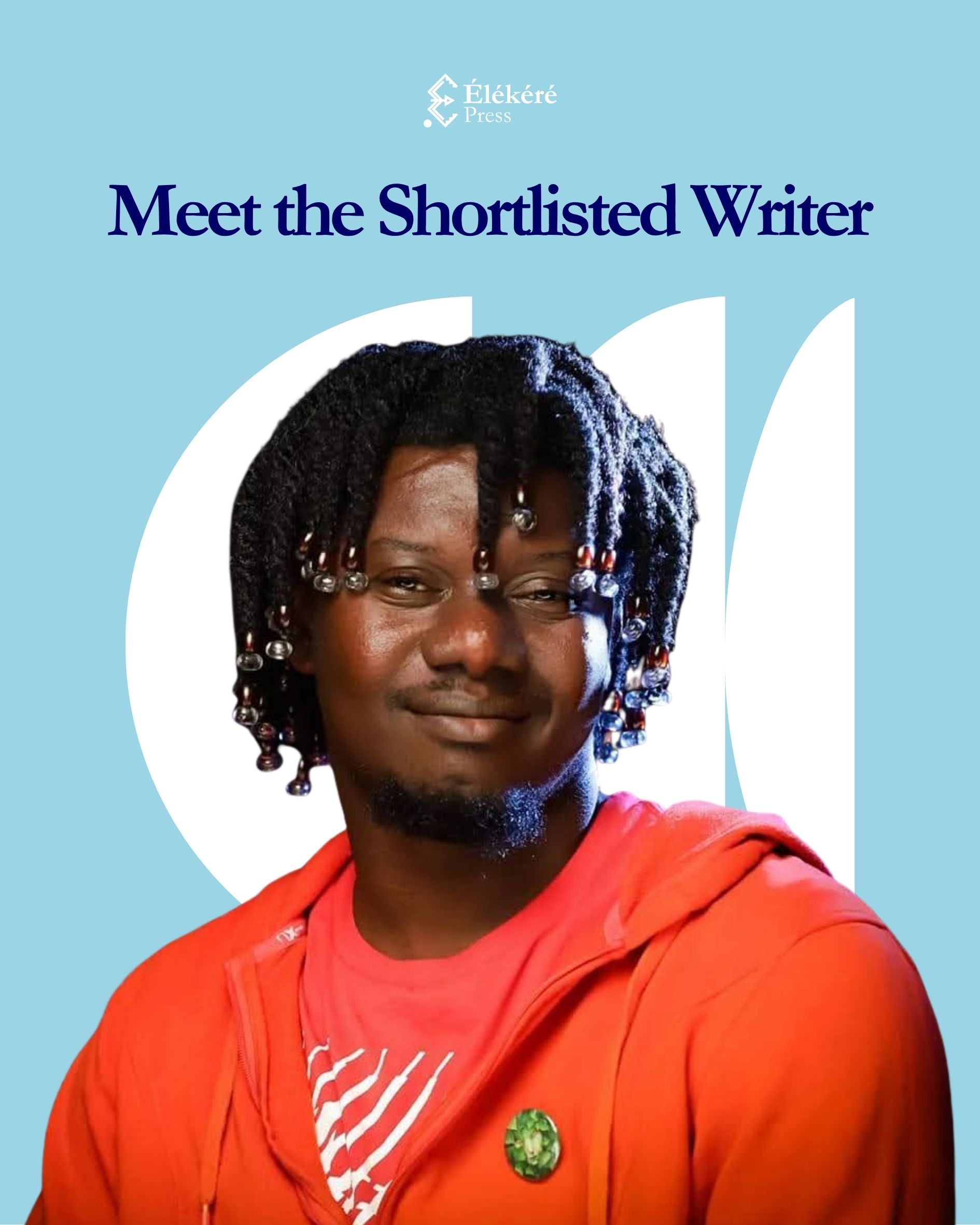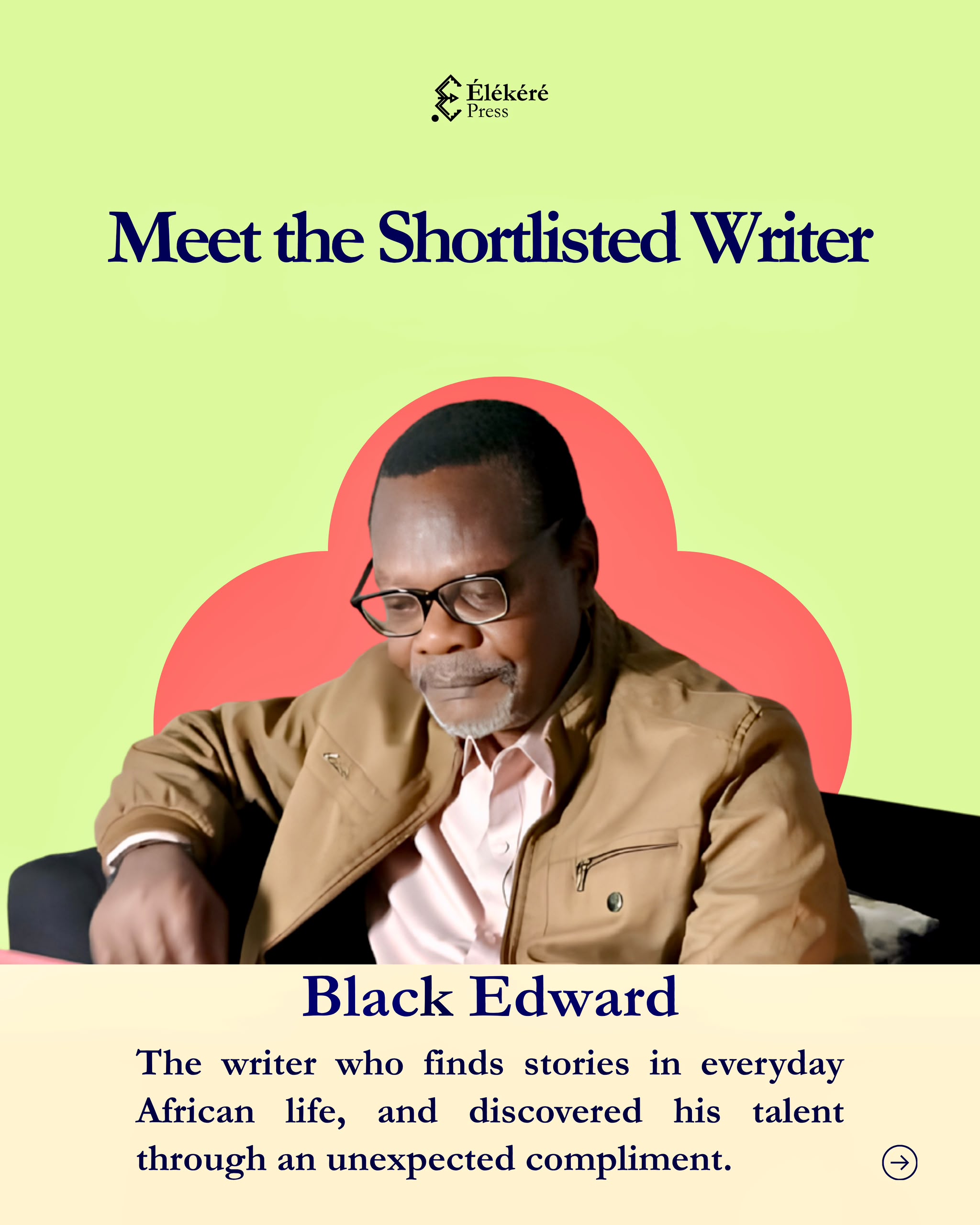
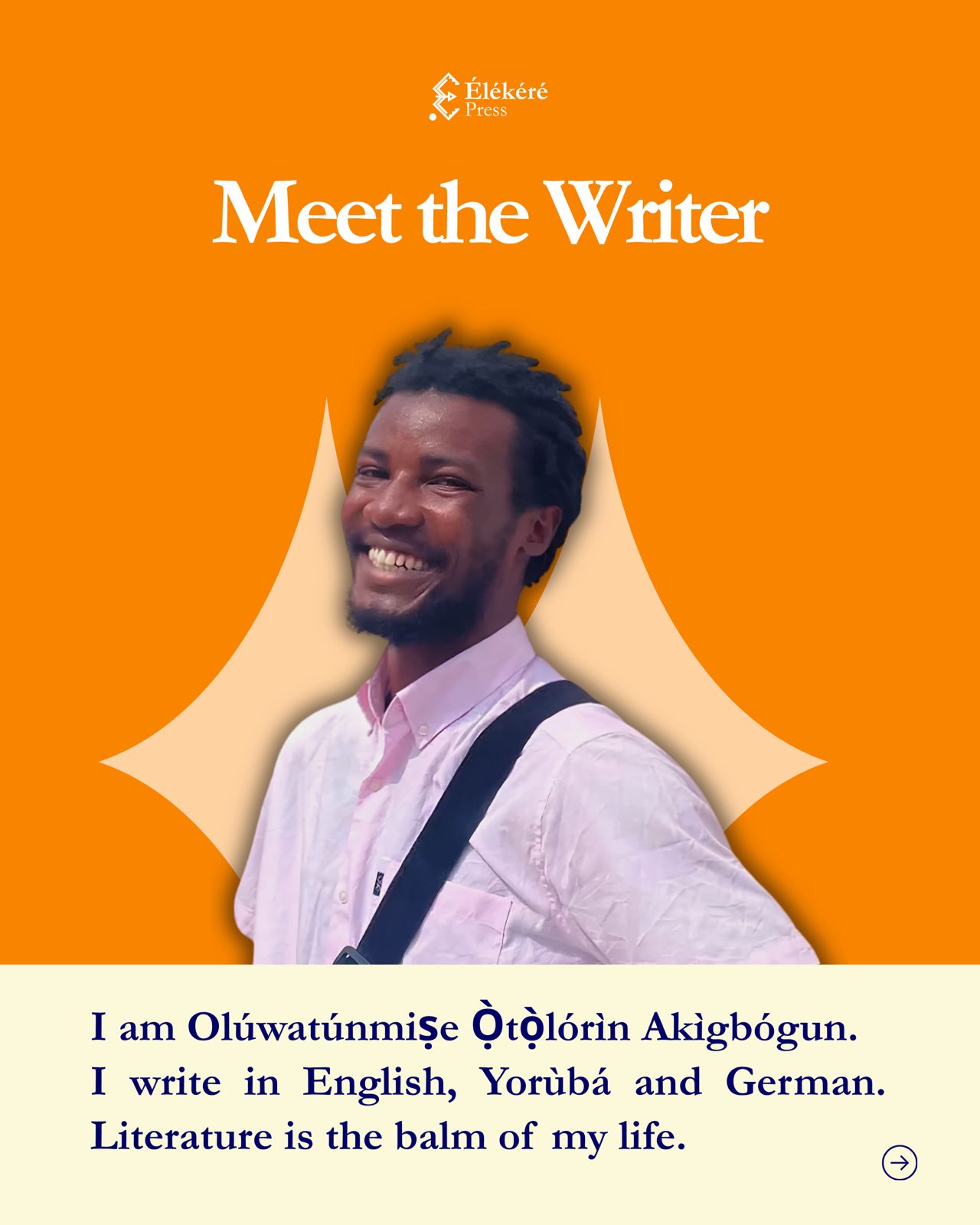

In this interview, shortlisted writer Olúwatúnmiṣe Ọ̀tọ̀lórìn Akìgbógun reflects on the questions that drive their fiction, the dream that inspired their shortlisted story, the writers who continue to shape their literary imagination, and the work of becoming a writer. They also share their current projects, beloved rereads, and what winning the Élékéré Short Story Prize would mean to them.
1. Introduce yourself!
I am Olúwatúnmiṣe Ọ̀tọ̀lórìn Akìgbógun. I write in English, Yorùbá and German. Literature is the balm of my life.
2. How would you describe your authorial interests? What themes, questions, and topics interest you?
I am interested in the liberation that literature can make possible for writers and readers. My authorial concerns vary from project to project. The questions that lead me to fiction are of the compelling kind, the ones I ruminate on and cannot resolve otherwise. Resolution itself is not guaranteed. I am often rewarded with, and delighted by, complications of what I thought I knew, leaps into the sublime and a sustaining clarity concerning a dramatised situation.
In Sweet Salt, for instance, one of the questions is: “What becomes of this family of strangers?” Sometimes, the questions precede the first sentence. Sometimes, these concerns are clarified as the text unfolds. Sometimes, as is the case in my debut collection, God Save The Family, variations of a particular concern are tackled.
3. Tell us about your shortlisted story and what inspired it.
I wrote Sweet Salt in my last days in university, in response to a contest themed “Dark Yuletide”. As I often do, I wrote the uncanny, wholesome story I wanted to write.
The entry point into the story for me was a dream my grandmother once shared with me some years ago. That paved the way. I heard the first sentence and wrote the first draft within an hour or so.
4. What are some authors and writers you admire, and why?
I cherish D. O. Fágúnwà, whose works nourish and challenge my Yorùbá literary imagination and practice; Chimamanda Ngozi Adichie, whose Purple Hibiscus made me a different kind of reader, and whose works and moral imagination remain an enriching force; and Ben Okri, for being a competent wizard, for his sprawling language and possible truths.
I also admire Toni Morrison for possessing unsurpassable clarity, wisdom and skill, for writing sublime sentences, compelling paragraphs and formidable novels; Arundhati Roy for her tremendous works, intellect and moral courage—The God of Small Things penetrated my imagination; James Baldwin for his astounding vision and the sophistication of the witness he bore, for the ferocious things he did to and with language; Zadie Smith, who is a force of nature in every sense; and Franz Kafka, who remains a perpetual astonishment.
5. When did you first realise you were a writer? What was the moment like?
I always knew it. Because I grew up in a working-class background, I did not consider it viable to be a writer. I spent years reading and writing while simultaneously distancing myself from the term and embracing it tentatively.
Eventually, when the realisation became acute that it is writing that makes me possible, I admitted it to myself and, like veteran witches in Nollywood movies, confess it when asked about my vocation.
For me, it is less of a single moment and more of an accumulation that eventually had to be reckoned with before I could proceed.
6. What is a typical writing day like for you?
I often write my first drafts on my phone. I write subsequent drafts longhand. I keep yellow legal pads, a jotter, a bowl of water and two black pens by my bedside.
My routines are somewhat seasonal. There are days, weeks even, when I write before starting the day; there are days when afternoons through evenings meet me catapulted into the zone. I relish the quiet of midnight; it is occasionally productive for me. Sometimes, I write for less than 30 minutes. Other times, I write for three hours or more.
I used to write seated. I no longer do that. I write in bed more and more these days. It preserves my back.
A typical writing day for me finds me oscillating between straining for the balanced sentence, attaining it, being critical of it, losing it or retaining it, longing for the finished draft as a form of consolation and torture, progressing with the work, feeling directed when it is really going well, and battling a mix of nausea, glee and frustration when I read what I write some hours later.
I get by. Somehow.
7. What are you working on? Tell us about your works in progress.
I am currently working on my debut story collection, God Save The Family, a collection of nine stories interested in looking at families, how they give or withhold love, and how devastations or glory consume them.
Simultaneously, I am working on This Way Is Forward, a short novel set in Aba. It preoccupies itself with the collapse of a family following a serious departure.
8. If you could reread any book or story multiple times, what would it be and why?
One of the novels that has such a hold on me is Ben Okri’s The Famished Road. I have found myself in affinity with Azaro, for varying reasons. One of the things I deeply appreciate about the novel is its sublime and sustained preoccupation with spiritual realities and the lives of poor folks. It trivialises neither elements of the supernatural nor the violence of real life. It considers, with acuity, the dynamics of lack, political dysfunction, alienation and family.
It contains sentences and paragraphs of remarkable, and occasionally stupefying, reach. The passages in which Azaro gets lost in the market while searching for his mother and listens to spirits and market people make incisive and ambiguous declarations about Nigeria’s turmoil, as well as the dream sequence in which the myth of the road is dramatised, are brilliant instances of the quality of vision Okri brings to the novel.
Toni Morrison’s Paradise is a pilgrimage novel for me: I return to it at least once a year. I have read it six times now, and the bounty and genius of Paradise is that, upon rereading, it yields more and more to the attentive reader. My favourite character across literature, Consolata, appears in Paradise.
9. Do you have any reading recommendations for us?
Stories like “Concerning The Bodyguard” by Donald Barthelme, “Crazy They Call Me” and “Two Men Arrive In A Village” by Zadie Smith, “Seven Floors” by Dino Buzzati, and “The Future Looks Good” by Lesley Nneka Arimah are towering achievements.
Novels like 10 Minutes and 38 Seconds in this Strange World by Elif Shafak and A Suitable Boy by Vikram Seth overtake one in serious ways. Ghana Must Go by Taiye Selasi is a brilliant, brilliant novel. It will accompany my memory to the grave.
Anowa by Ama Ata Aidoo and The Collector of Treasures by Bessie Head are spectacular texts.
10. What would winning the Élékéré Short Story Prize mean to you?
In the case that I win the Élékéré Short Story Prize, I would be very honoured. Having my story’s value recognised and coming into the possession of some money with which to sustain my practice would be both affirming and vital.
It would be monumental for me in a number of ways. This would be my first story prize win. It would be thrilling to the boy I was, who read and wrote incessantly, to have come this far, as it would be to me—being on the cusp of the exhilarating enterprise of being the juggernaut of my dreams.
11. Where can people reach you or follow your work?
You can find me on the following platforms:
- Facebook: Olúwatúnmiṣe
- Instagram: Oluwatunmisesavesthenight
- X: OlúwatúnmiṣeSavesTheNight
- Substack: oluwatunmisesavesthenight
Thank you for your good work. We wish you the best